Diamonds may be forever, but so are the regrets of buying a fake one. As the world's most popular gemstone for engagement rings and fine jewelry, diamonds are also the most frequently imitated. From cubic zirconia to moissanite to lab-grown diamonds, the landscape of diamond look-alikes has never been more complex. Whether you're investing in a milestone piece or verifying a stone you already own, this guide equips you with expert knowledge to identify genuine natural diamonds.
Quick Facts: Diamond
Understanding Diamond Brilliance and Fire
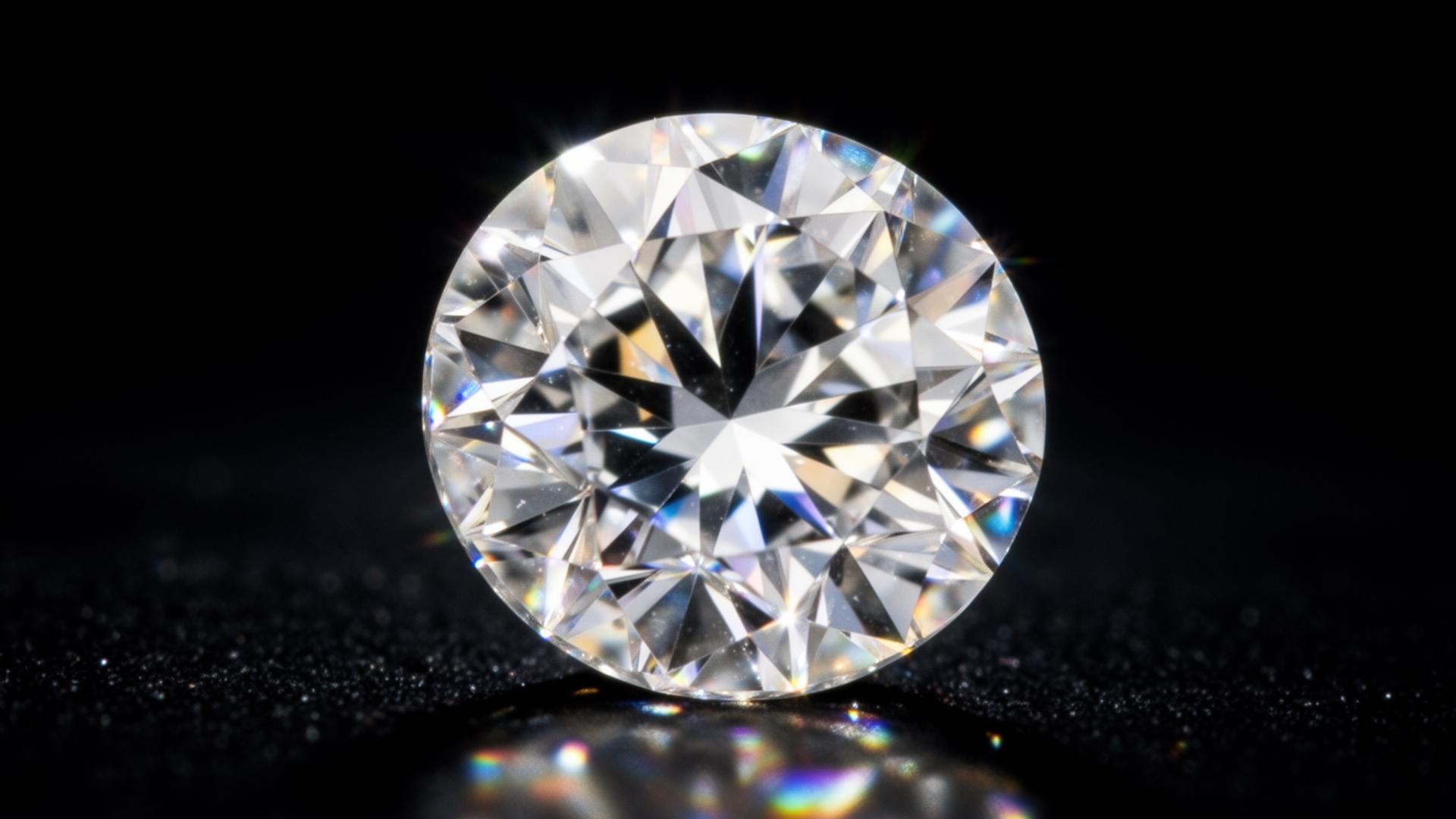
Diamonds interact with light in a unique way due to their exceptional refractive index (2.417) and high dispersion. Brilliance refers to the white light reflected from a diamond, while fire refers to the spectral colors (rainbow flashes) created by dispersion. A well-cut diamond balances both, creating the mesmerizing sparkle diamonds are famous for. Compare this to cubic zirconia, which shows more colorful fire but less brilliance, or moissanite, which displays a characteristic 'disco ball' effect with stronger fire and double refraction. Even from a photo, GemstoneAI can analyze light performance patterns to flag potential simulants.

The Fog Test and Other Home Methods
Several simple at-home tests can help screen potential diamonds, though none are definitive on their own:
- Fog test — breathe on the stone; a real diamond disperses heat instantly and won't stay foggy, while glass and CZ stay fogged for 2–4 seconds
- Newspaper test — place the stone face-down on text; a well-cut diamond refracts light so much you can't read through it, unlike glass or CZ
- Water test — drop the stone in water; diamonds sink quickly due to high density (3.52); most fakes sink more slowly
- UV test — about 25–35% of diamonds fluoresce blue under long-wave UV; most simulants don't
- Sparkle test — rock the stone; diamonds show a balance of white and colored light; moissanite shows excessive rainbow colors
Natural Diamond vs. Lab-Grown Diamond
This is the most challenging distinction in modern gemology. Lab-grown diamonds (CVD and HPHT) are chemically, physically, and optically identical to natural diamonds. Standard gemological testing cannot distinguish them. Only advanced spectroscopic analysis can detect the subtle growth signatures that differentiate lab-grown from natural. HPHT diamonds may show a cross-shaped strain pattern and metallic flux inclusions. CVD diamonds can show striated growth patterns. Both types must be disclosed and are typically valued at 70–90% less than equivalent natural diamonds.
Common Diamond Simulants
Understanding the most common diamond simulants helps you identify what a stone is NOT:
- Cubic Zirconia (CZ) — heavier than diamond (SG 5.8 vs 3.52), softer, shows more fire but less brilliance, may have orange flash
- Moissanite — nearly as hard as diamond (9.25), strong double refraction visible as doubled facet edges, excessive fire
- White sapphire — lacks the fire and brilliance of diamond, appears more 'watery' or flat
- White topaz — much softer (8 Mohs), scratches easily, lacks diamond's adamantine luster
- Glass — warm to touch, may contain bubbles, significantly softer, rounded facet edges
Diamond Testers: Capabilities and Limitations
Electronic diamond testers measure thermal conductivity — diamonds conduct heat exceptionally well. However, basic thermal testers have a critical flaw: moissanite also has very high thermal conductivity and will register as 'diamond' on basic testers. Modern dual-testers measure both thermal and electrical conductivity, since moissanite is electrically conductive while diamond (with rare exceptions like Type IIb blue diamonds) is not. For ultimate confidence, look for testers that combine both measurements or use UV fluorescence analysis. As a first pass, GemstoneAI's image-based detection can help flag common simulants before you invest in testing equipment.
The Importance of Certification
For any significant diamond purchase, insist on a grading report from a reputable gemological laboratory. GIA (Gemological Institute of America) is considered the gold standard, providing consistent and conservative grading. AGS (American Gem Society) is equally reliable, particularly for cut grading. Reputable reports include a unique number laser-inscribed on the diamond's girdle, which can be verified against the lab's database. Be cautious of reports from unknown labs, as grading standards vary dramatically and some labs are known for inflated grades.
Identify Your Diamond Instantly
Skip the guesswork. Use GemstoneAI's advanced image recognition to authenticate your diamond in seconds.
Try GemstoneAI Free