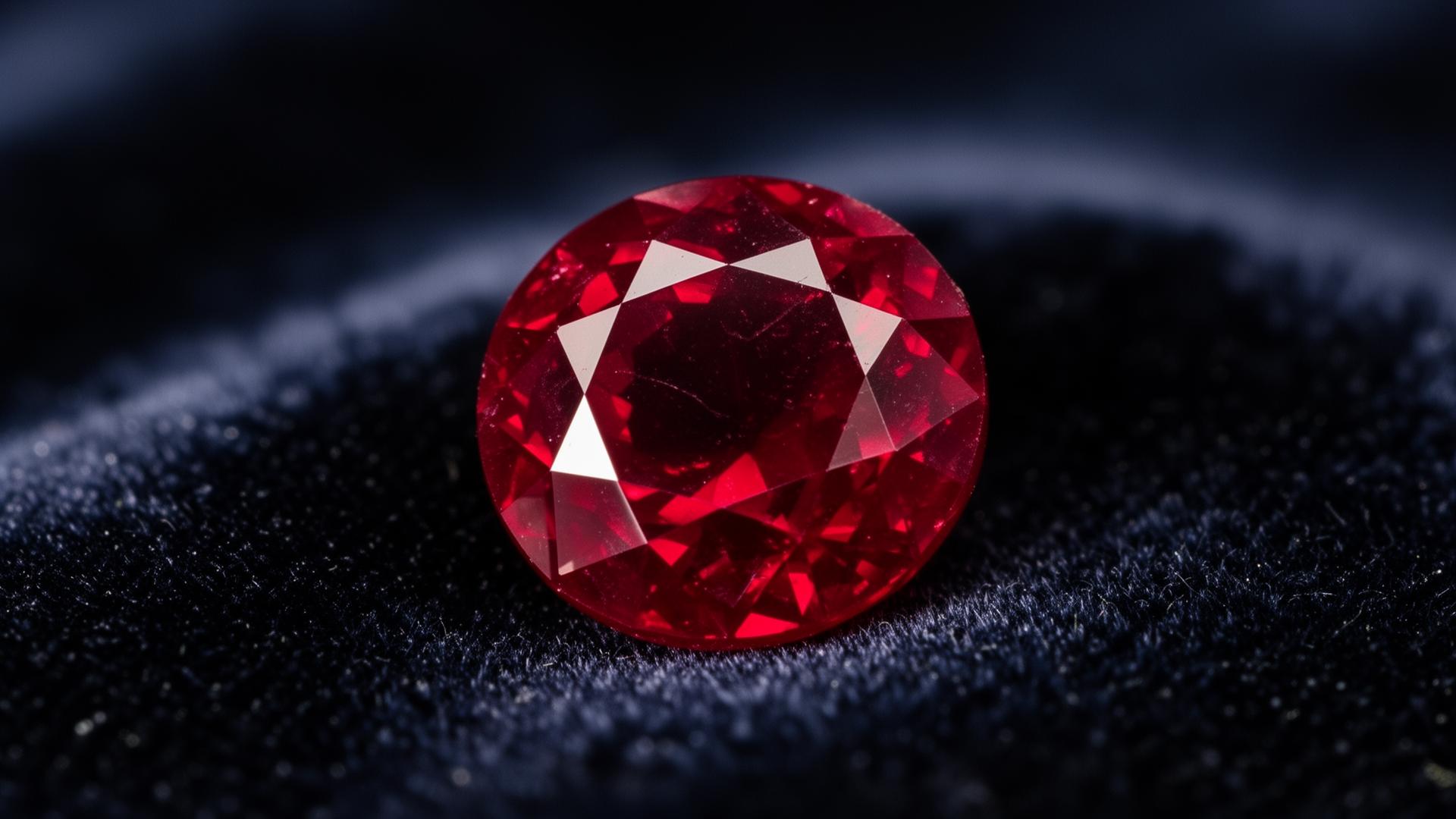
Spinel has long been one of gemology's best-kept secrets. For centuries, the world's most famous 'rubies' — including the Black Prince's Ruby in the British Crown Jewels and the Timur Ruby — were actually spinels. Today, spinel is finally being recognized as a magnificent gemstone in its own right, prized for its brilliant colors, excellent hardness, and the fact that it's almost never treated. If you're looking for a gemstone that offers exceptional beauty with genuine authenticity, spinel deserves your attention.
Quick Facts: Spinel
Spinel Colors and Varieties
Spinel occurs in a remarkable range of colors, each with its own appeal and market. Red spinel is the most valuable, particularly the vivid 'flame' red from Burma that was historically confused with ruby. Pink spinel ranges from hot pink to soft pastel — Mahenge, Tanzania produces exceptional vivid pinks that have taken the gem world by storm. Blue spinel includes the rare and valuable cobalt blue variety from Vietnam and Sri Lanka, showing an intense blue rivaling sapphire. Gray and violet spinels, sometimes called 'jedi' spinel, have gained a following for their unique colors. Black spinel is popular in contemporary jewelry design.

Why Spinel Was Confused with Ruby
The historical confusion between spinel and ruby is understandable — both occur in the same geological environments (marble deposits in Burma and Sri Lanka), both can be vivid red, and both are found in alluvial deposits alongside each other. Key differences for identification:
- Crystal system — spinel is cubic (singly refractive); ruby is trigonal (doubly refractive with dichroism)
- Fluorescence — spinel often shows strong red fluorescence under UV, similar to ruby, but the spectrum differs
- Inclusions — spinel contains octahedral crystal inclusions and 'fingerprint' patterns different from ruby's silk
- Hardness — spinel (8) is slightly softer than ruby (9), though both are excellent for jewelry
- Spectroscope — the absorption spectra of spinel and ruby are distinct, providing definitive identification

Cobalt Blue Spinel
Cobalt blue spinel is among the most valuable colored gemstones, with fine specimens exceeding $10,000 per carat. Colored by cobalt rather than iron (which produces more grayish blues), cobalt spinel shows a vivid, electric blue sometimes compared to the finest sapphires. Identification requires spectroscopic confirmation of cobalt content. Vietnamese cobalt spinels from Luc Yen are particularly prized. Sri Lanka also produces cobalt-colored material. Be cautious of cobalt blue synthetic spinel, which is inexpensive and widely available as a sapphire simulant.
The Untreated Advantage
One of spinel's greatest selling points is that it is almost never treated. Unlike rubies (routinely heated), sapphires (commonly heated or diffused), and emeralds (universally oiled), the vast majority of spinels on the market are completely natural and untreated. This makes spinel appealing to collectors who value natural, unenhanced gems. When treatments do occur, they are limited to occasional heat treatment of some stones — but this is rare enough that untreated status can generally be assumed unless otherwise noted. For buyers who use GemstoneAI to evaluate their collection, spinel's natural state makes it one of the most straightforward gems to authenticate.
Synthetic Spinel in the Market
Synthetic spinel has been produced since the early 1900s using the Verneuil (flame-fusion) method. Ironically, synthetic spinel is most commonly used as a simulant for other gemstones rather than sold as spinel itself — blue synthetic spinel imitates sapphire and tanzanite, while red synthetic spinel imitates ruby. Identifying synthetic spinel:
- Anomalous double refraction (ADR) — synthetic spinel shows a characteristic tabby-stripe pattern under crossed polarizers
- Gas bubbles — round or elongated bubbles from the growth process
- Curved striae — growth lines from the Verneuil process
- Too-perfect color — overly uniform and saturated color without natural variation
- Price — synthetic spinel costs a few dollars per carat; natural fine spinel costs hundreds to thousands
Buying Guide and Value Assessment
Spinel represents exceptional value compared to ruby and sapphire. A fine red spinel costs a fraction of an equivalent ruby, and blue spinel is typically less expensive than comparable sapphire — though cobalt blues are approaching sapphire prices. When buying, focus on color intensity and saturation as the primary value factor. Eye-clean clarity is standard. Larger sizes (over 5 carats) are scarce and command premiums. For significant purchases, obtain lab certification that confirms natural origin and, for blue stones, cobalt coloration. Mahenge pinks and Burmese reds currently offer the strongest market appreciation.
Identify Your Spinel Instantly
Skip the guesswork. Use GemstoneAI's advanced image recognition to authenticate your spinel in seconds.
Try GemstoneAI Free