Tanzanite, found only in a small area near Mount Kilimanjaro in Tanzania, is one of the rarest gemstones on Earth. Its extraordinary violet-blue color and strong trichroism make it a favorite among collectors and jewelry lovers. However, its rarity and value make it a prime target for imitation and misrepresentation. Whether you're buying loose stones or evaluating tanzanite jewelry, this guide will help you identify the genuine article — and understand why this single-source gemstone deserves extra scrutiny.
Quick Facts: Tanzanite
Tanzanite's Unique Trichroism
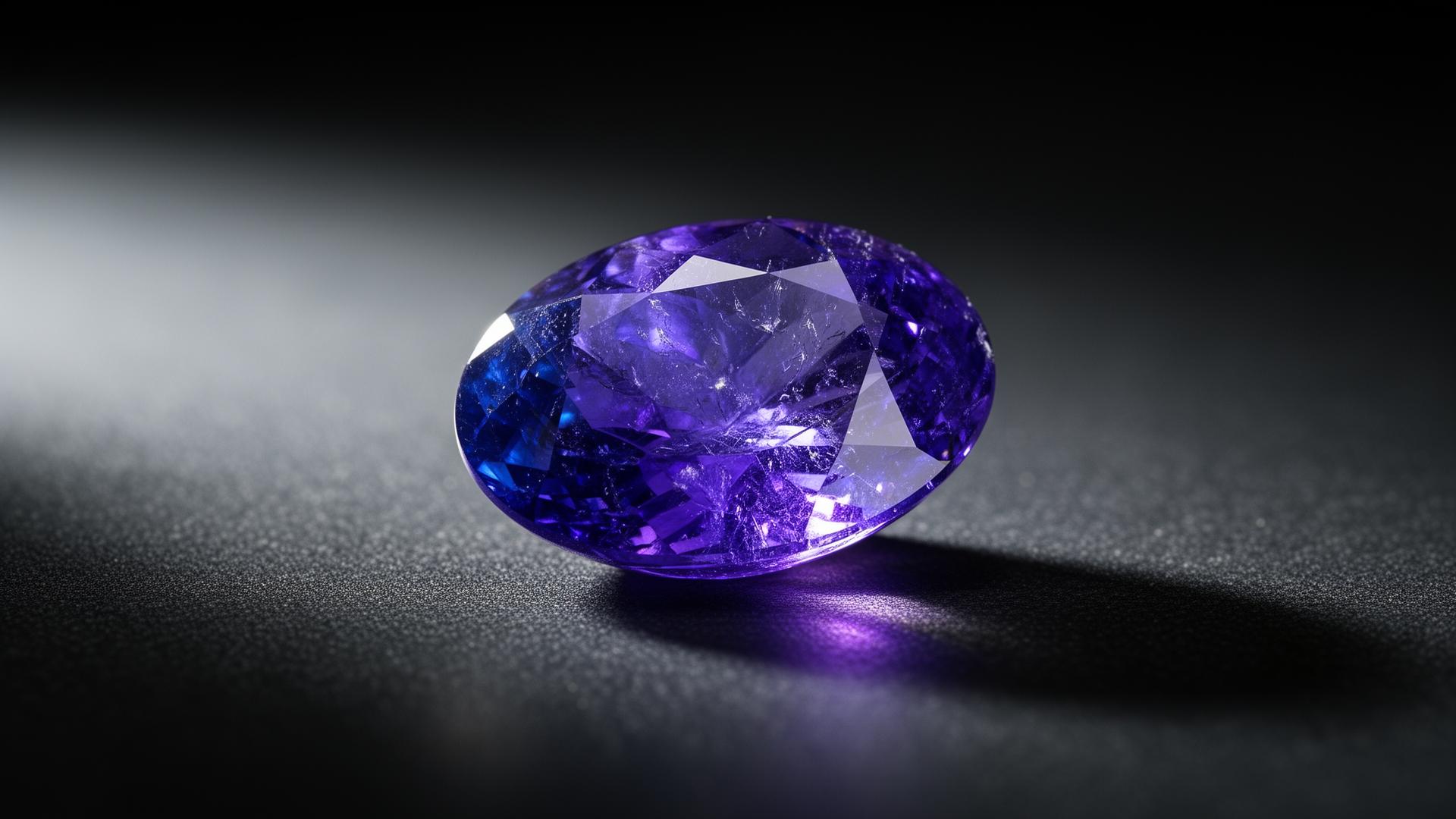
Tanzanite is one of the most strongly trichroic gemstones — it shows three distinct colors when viewed from different crystallographic axes: blue, violet, and burgundy-red. This property is key to identification. When you rotate a tanzanite under a single light source, you should see the color shift between blue and violet. Simulants like synthetic forsterite or blue glass cannot replicate this complex color behavior. A dichroscope reveals all three pleochroic colors clearly in natural tanzanite. GemstoneAI's identification engine is trained to recognize tanzanite's unique spectral signature, making it a useful first-pass tool for online purchases.
Color and Heat Treatment
Almost all tanzanite on the market has been heat treated. In its rough state, tanzanite is typically brownish or burgundy. Controlled heating at approximately 500–700°C permanently transforms the color to the desired blue-violet. This treatment is universally accepted in the trade and considered permanent. Extremely rare unheated tanzanites with natural blue-violet color command premium prices. The finest tanzanites show a rich, saturated violet-blue in fluorescent light and a more purple tone in incandescent light.

Common Tanzanite Simulants
Several stones are used to imitate tanzanite, and knowing them helps you spot fakes:
- Synthetic forsterite — the most common simulant; lacks tanzanite's trichroism and has different refractive index
- Blue-violet glass — no dichroism, may contain bubbles, warm to touch, lower hardness
- Iolite — natural stone with similar color but much lower value; different RI (1.54 vs 1.69)
- Coated topaz — surface coating can create tanzanite-like color but shows wear at facet edges
- CZ in blue-violet — too heavy, no trichroism, overly brilliant
Evaluating Tanzanite Quality
Tanzanite quality is judged primarily on color intensity. The most valuable stones show a deep, saturated blue-violet visible face-up in the finished gem. Size matters significantly — tanzanites under 5 carats rarely achieve the deep color saturation seen in larger stones. Clarity is generally eye-clean, as tanzanite forms in a relatively inclusion-free environment. Visible inclusions reduce value noticeably. Cut quality affects color presentation — skilled cutters orient the stone to maximize the blue-violet face-up color while minimizing the brownish axis.
Caring for Your Tanzanite
Tanzanite ranks 6–7 on the Mohs hardness scale and has perfect cleavage in one direction, making it more fragile than sapphire or ruby. It should never be cleaned in ultrasonic or steam cleaners, as thermal shock can cause cleavage fractures. Remove tanzanite jewelry before physical activities. Store separately from harder gems. Clean only with warm soapy water and a soft brush. Despite these care requirements, tanzanite is perfectly suitable for pendants, earrings, and carefully worn rings.
Investment Considerations
Tanzanite's single-source origin near Mount Kilimanjaro means the supply is finite. Geologists estimate the mines could be depleted within 20–30 years, making tanzanite a potentially appreciating asset. However, investing in gemstones requires caution — purchase only certified stones from reputable dealers, and be aware that lab-grown tanzanite may eventually enter the market, potentially affecting values. Focus on top-quality specimens over 5 carats with exceptional color for the best long-term value retention. Using GemstoneAI to document and track your collection's quality over time can help you make informed decisions about acquisitions.
Identify Your Tanzanite Instantly
Skip the guesswork. Use GemstoneAI's advanced image recognition to authenticate your tanzanite in seconds.
Try GemstoneAI Free