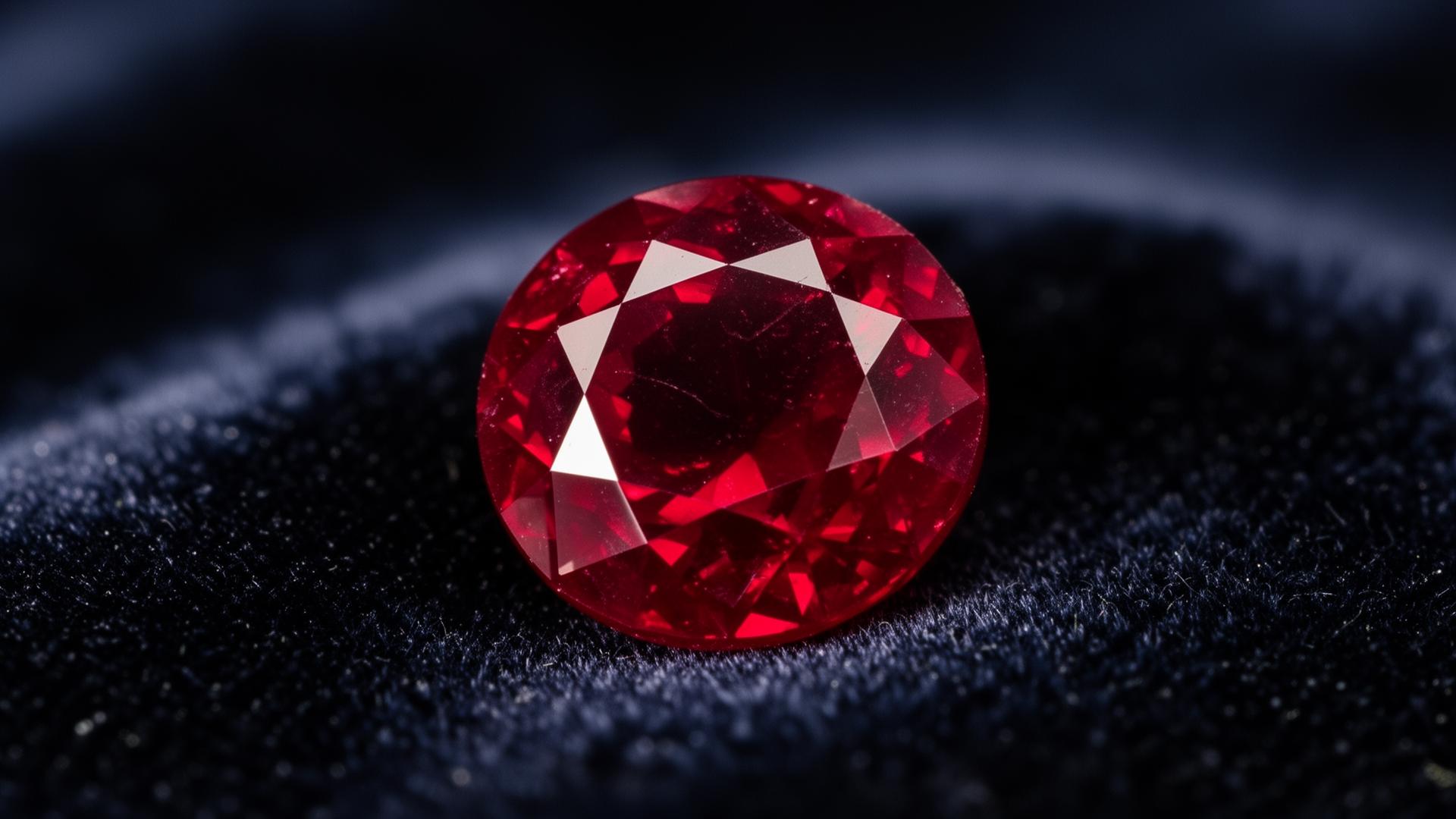
Garnets are one of the most diverse gemstone groups, spanning nearly every color of the rainbow. Far from the 'cheap red stone' stereotype, garnets include some of the world's most valuable gems — tsavorite greens rivaling emerald, demantoid with fire exceeding diamond, and color-change varieties that challenge alexandrite. Whether you're evaluating a vintage piece or sourcing investment-grade demantoid, this guide covers the entire garnet family in the depth it deserves.
Quick Facts: Garnet
The Garnet Family Tree
Garnets are actually a group of closely related minerals with similar crystal structures but different chemical compositions. The six main species and their key varieties include almandine (deep red to brownish-red, the most common garnet), pyrope (blood red, often with slight brown or orange tones), rhodolite (a pyrope-almandine blend showing raspberry to grape purple), spessartine (orange to reddish-orange, including the vivid 'Mandarin' variety), grossular (includes green tsavorite and orange hessonite), and andradite (includes the legendary green demantoid with its incredible fire).

Key Identification Properties
Garnets share several properties that help with identification:
- Single refraction — garnets are isotropic (singly refractive), unlike tourmaline, sapphire, or emerald which are doubly refractive
- No cleavage — garnets fracture conchoidally, making them durable for jewelry
- Moderate hardness — 6.5–7.5 on Mohs scale depending on species
- Characteristic inclusions — each species has typical inclusion types (horsetail in demantoid, sugar-grain in hessonite)
- Magnetic response — many garnets are attracted to strong magnets due to iron content, a useful screening test

Demantoid: The King of Garnets
Demantoid garnet deserves special recognition as one of the most prized collector gems. Its dispersion (fire) of 0.057 exceeds that of diamond (0.044), creating spectacular rainbow flashes. Russian demantoids from the Ural Mountains often contain 'horsetail' inclusions — radiating bundles of chrysotile fibers that are so distinctive and attractive they actually increase value. Fine Russian demantoids over 2 carats are extraordinarily rare and can command prices exceeding $10,000 per carat. Namibian and Madagascar demantoids are more available but typically lack the horsetail inclusions.
Tsavorite: The Emerald Alternative
Tsavorite is a chromium/vanadium-bearing grossular garnet found primarily in East Africa (Kenya and Tanzania). It offers vivid green color comparable to emerald but with several advantages: higher brilliance due to single refraction, greater durability (no cleavage), rarely treated, and typically cleaner than emerald. Fine tsavorites over 5 carats are rare and highly valuable. When identifying tsavorite, confirm single refraction (rules out emerald, tourmaline) and the absence of dichroism (unlike emerald). Inclusions may include graphite platelets and actinolite crystals. GemstoneAI recognizes tsavorite as a distinct variety, helping you confirm identification before consulting a specialist dealer.
Color-Change Garnets
Some garnets exhibit a remarkable color-change phenomenon, shifting from blue-green in daylight to purple-red under incandescent light. These are typically pyrope-spessartine blends from East Africa or Sri Lanka. Color-change garnets can be distinguished from alexandrite by their single refraction (alexandrite is doubly refractive) and different refractive index. Fine color-change garnets are highly sought by collectors and can command prices of several thousand dollars per carat for stones with strong, complete color change.
- Daylight color typically ranges from blue-green to grayish-green
- Incandescent color shifts to purple, reddish-purple, or pinkish
- Strongest color changes are found in East African material
- Unlike alexandrite, color-change garnet is singly refractive
- Some specimens also show subtle color shift between fluorescent and daylight conditions
Authentication and Buying Tips
Garnets are rarely treated or synthesized, making natural origin generally reliable. However, misidentification between garnet species is common — a 'ruby' in antique jewelry is often a garnet. Use specific gravity and refractive index measurements to distinguish species. For high-value varieties (demantoid, tsavorite, color-change), obtain lab certification. When buying, prioritize color intensity and saturation. For demantoid, horsetail inclusions add value. For tsavorite, look for vivid green without excessive darkness. Rhodolite should show a lively raspberry-purple without brownish tones.
Identify Your Garnet Instantly
Skip the guesswork. Use GemstoneAI's advanced image recognition to authenticate your garnet in seconds.
Try GemstoneAI Free