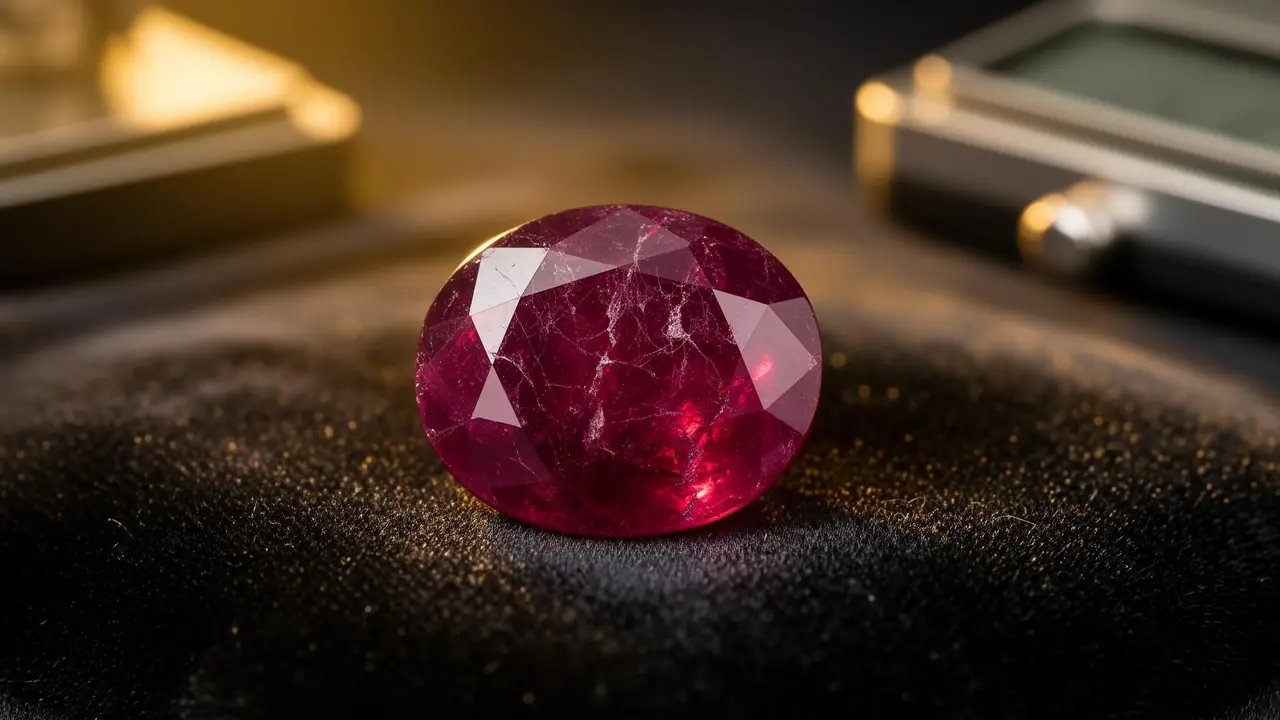
Ruby prices span an extraordinary range — from $100 per carat for commercial-grade stones to over $1,000,000 per carat for the finest untreated Burmese pigeon blood rubies at auction. Understanding where your stone falls on this spectrum requires evaluating color, clarity, origin, treatment, and market demand. This guide breaks down current ruby pricing by quality tier and explains the factors that create such dramatic price differences.
GemstoneAI market index, updated November 9, 2026
$1,567 per carat
A market-wide average across qualities and sizes, refreshed weekly. What your ruby is worth depends on its carat, color, clarity, cut, treatment and origin.
See the live ruby marketRuby Price Chart
| Quality | Price/Carat | Notes |
|---|---|---|
| Commercial (heated, included) | $100–$500 | Mass market jewelry grade |
| Good (heated, slightly included) | $500–$3,000 | Fine jewelry suitable |
| Fine (heated, eye-clean) | $3,000–$15,000 | High-end jewelry grade |
| Exceptional (unheated, vivid) | $15,000–$100,000 | Collector/investment grade |
| Museum (unheated, pigeon blood, 3ct+) | $100,000–$1,000,000+ | Auction-level rarities |
What ruby jewelry is worth
The middle first-read value from GemstoneAI scans of each kind of ruby jewelry.
All jewelry values from real scansWhat Determines Ruby Price?
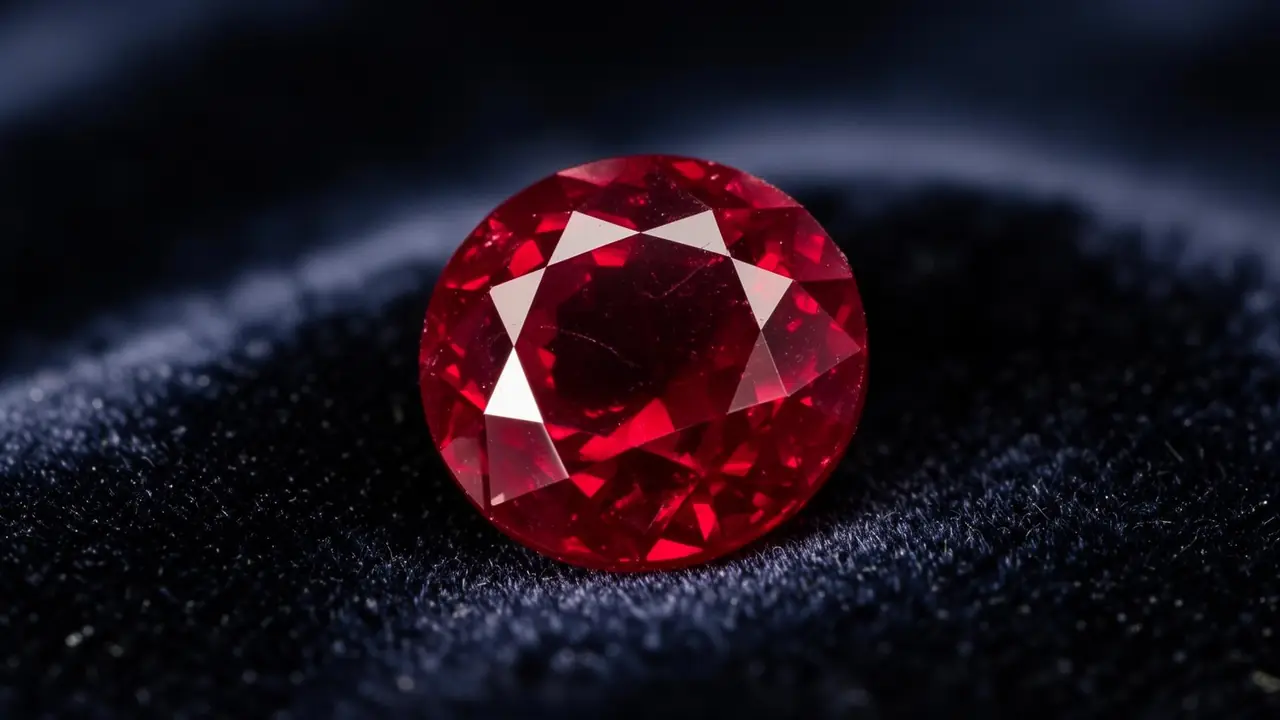
Four primary factors drive ruby value: color, clarity, carat weight, and origin. Color is king — a vivid, saturated red with slight blue undertones (the legendary 'pigeon blood' color) commands the highest premiums. Clarity matters less in rubies than diamonds; slight inclusions are expected and even desirable as proof of natural origin. Carat weight has an exponential effect on price — a 3-carat ruby of fine quality can cost 10x more per carat than a 1-carat stone of the same quality. Origin plays a significant role, with Burmese stones commanding 2-5x premiums over comparable Mozambican rubies. GemstoneAI provides directional value guidance. A photo cannot establish geographic origin, treatment status or an accurate carat weight; those details require reliable documentation or professional assessment.
How Treatment Affects Ruby Value
Treatment status is one of the most significant price factors. Untreated rubies of fine quality command premiums of 3-10x over treated equivalents. Standard heat treatment (accepted industry-wide) reduces value by 30-50% compared to unheated stones. Lead glass filling dramatically reduces value — a glass-filled ruby may sell for 1-5% of what an untreated stone of similar appearance would cost. Beryllium diffusion also significantly impacts price. Always request a lab certificate from GIA, Gübelin, or SSEF to verify treatment status before buying.
- Unheated natural: Full market value — the gold standard for collectors and investors
- Heat-treated only: 50-70% of untreated value — widely accepted in the trade
- Lead glass-filled: 1-5% of untreated value — essentially a different product
- Beryllium diffused: 10-20% of untreated value — must be disclosed
Ruby Prices by Origin
Geographic origin significantly impacts ruby pricing due to historical reputation and actual quality differences. Burmese (Myanmar) rubies remain the most valued, particularly from the Mogok Valley, where the finest pigeon blood stones originate. Mozambican rubies have emerged as strong competitors since 2009, offering excellent color and clarity at more accessible prices. Sri Lankan rubies tend toward lighter, pinkish tones and are priced accordingly. Thai rubies often show darker, brownish-red tones and sit at the lower end of the market. Madagascar and Tanzania also produce quality rubies at competitive prices.
Carat Weight and Price Escalation
Ruby prices escalate dramatically with carat weight. Fine-quality rubies over 5 carats are exceptionally rare and command auction prices. The price-per-carat curve is not linear — it's exponential. A 1-carat fine Burmese ruby might sell for $10,000-$30,000/ct, while a 5-carat stone of comparable quality could reach $100,000-$300,000/ct. For budget-conscious buyers, rubies in the 0.5-1.5 carat range offer the best value proposition. You can use GemstoneAI to quickly estimate carat weight from a photo and cross-reference current market data.
Ruby Market Trends
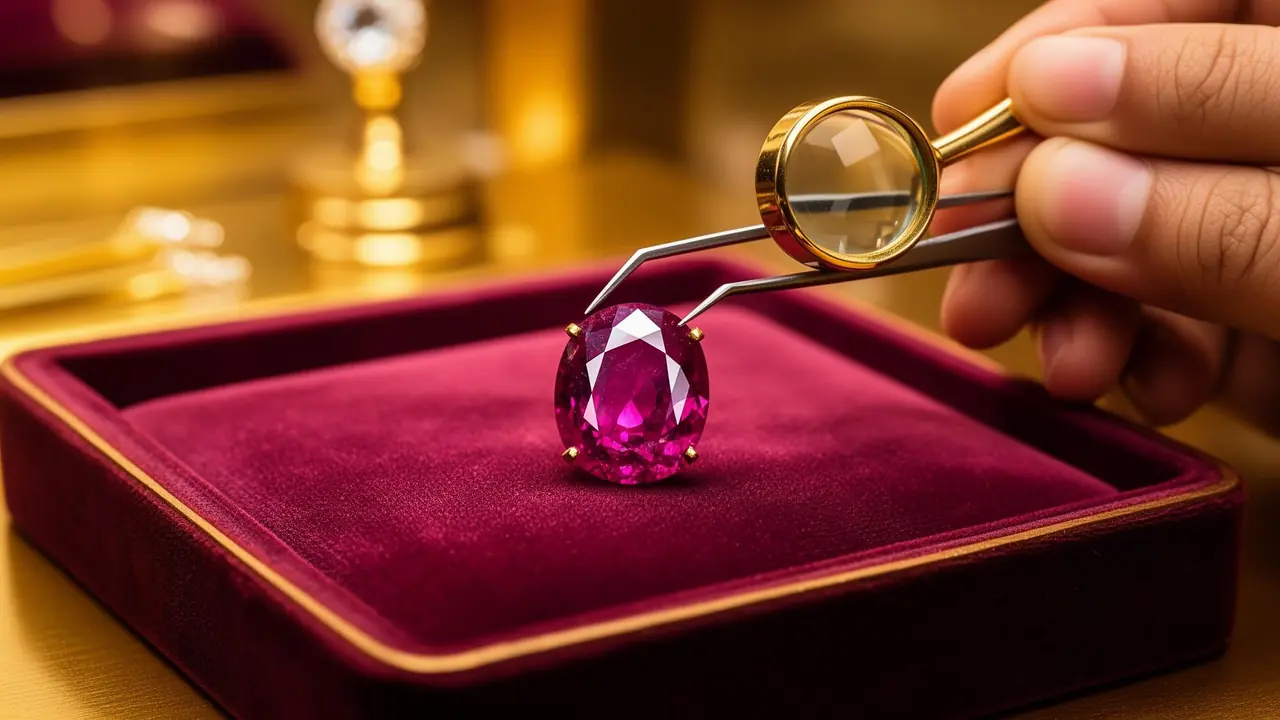
Ruby prices vary by quality, treatment, documentation and selling channel. Individual auction records do not establish annual appreciation for a typical stone. Compare recent, documented examples with similar characteristics and distinguish asking prices from completed sales. This guide does not provide a forecast or an expected investment return.
Get an Instant Ruby Valuation
Upload a photo and let GemstoneAI estimate your ruby's value using AI-powered analysis.
Try GemstoneAI Free